
Blueprints for tomorrow: The art of master-planned communities
This is the third story of our 75th anniversary editorial series, celebrating the people, milestones, and moments that have shaped Qualico since its founding in 1951. By looking back on our journey, we explore the values, resilience, and innovation that continue to guide us today and into the future.
 Great communities rarely happen by accident. They begin with a vision, take shape through careful planning, and evolve in step with the people who call them home.
Over 75 years, Qualico has transformed from a single-family homebuilder into one of Western Canada’s largest privately-held integrated real estate companies. One of its key verticals is land development, a dynamic process that involves managing and preparing land to support future community growth.
Through the decades, Qualico’s approach to land development has evolved dramatically through innovation and industry changes. Yet, over the years, a core belief prevails: the decisions made today should continue creating value long after the last home is built.
This long-term thinking continues to shape Qualico communities throughout Western Canada and Texas. It is also reflected in Qualico’s tagline, Helping Build Better Cities, which draws on the aim of creating agile, forward-thinking communities that contribute to the long-term health, viability and growth of our cities.
Building with the land, not against it
Long before streets are laid out or homes are designed, community planning begins with understanding the land itself.
Modern master-planned communities require years of study and preparation. At Qualico, the land development team, along with their consultants, examine topography, drainage patterns, existing vegetation, transportation connections, and the relationship between a site and the surrounding area. Every decision is considered within the context of how a community will function decades into the future.
That level of planning represents a significant shift in how land was developed in earlier times.
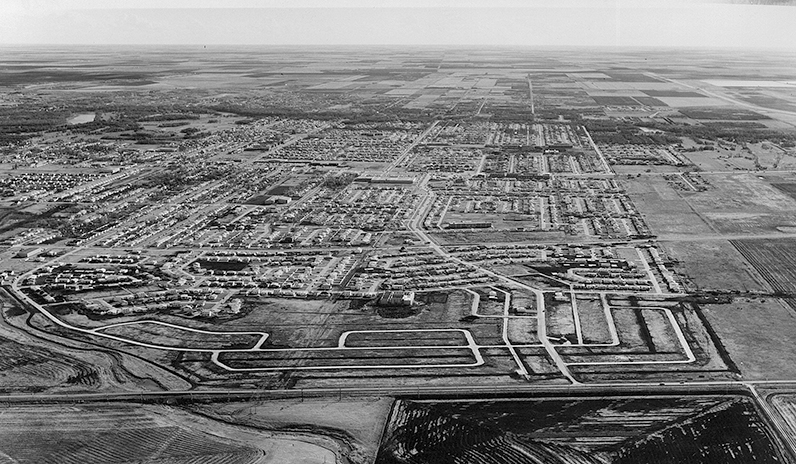
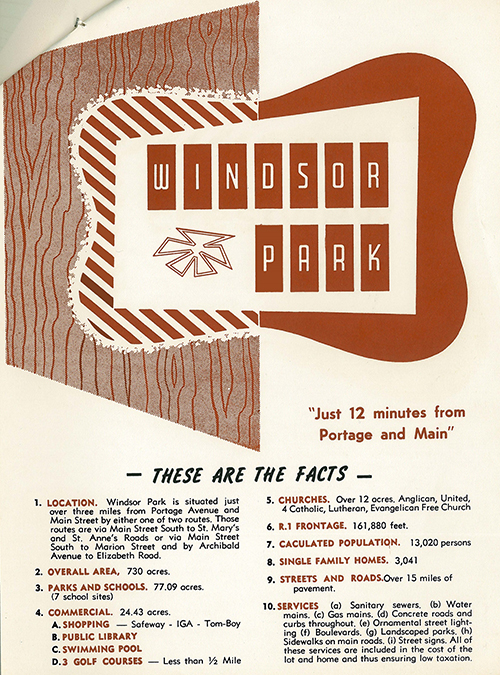 In the 1950s and early 1960s, Quality Construction (now Qualico) was one of a handful of local companies contracted to build homes in Windsor Park, Winnipeg’s first master-planned community and one of the largest developments of its kind in Canada at the time.
Building homes at scale in Windsor Park exposed Qualico to new ideas in community building. It also highlighted the company’s growing expertise in panelized construction and off-site manufacturing techniques that helped it grow rapidly to meet a post-World War II boom in housing demand.
As Qualico expanded its residential land holdings across Western Canada, a new way of thinking began to emerge. Land should not be treated simply as an asset to be developed. It should be approached as the foundation for adaptable communities that can serve residents for generations.
That new mindset took shape in the 1970s with the creation of a dedicated land development division, now known as Qualico Communities.
Today, the idea of building responsibly for future generations can be seen in the way natural systems are incorporated into many Qualico communities. Wetlands are built and connected to trail systems. Native grasses, tree stands, and natural landscapes help create habitats while improving water quality and strengthening residents’ connection to nature.
Today’s new homebuyers increasingly expect to live in communities with access to trails, parks, and outdoor spaces as part of everyday life. They want opportunities to walk, cycle, explore, shop, and connect with their surroundings without relying exclusively on a vehicle.
For Qualico Communities, the goal is not simply to build on the land. It is to work with the land to get the most out of it for the people who call it home.
Creating places people never outgrow
Perhaps the most significant shift in community development planning over the past 75 years has been the movement from subdivisions to master-planned communities.
Qualico Communities Winnipeg’s first master-planned community was River Park South, where development began in the early 1970s and continued for more than four decades.
At a scale rarely seen at the time, the community grew to include more than 8,000 homes, eight schools, a community centre, a library, shopping areas, extensive transit connections, and more than 150 acres of parks, lakes, and playgrounds.
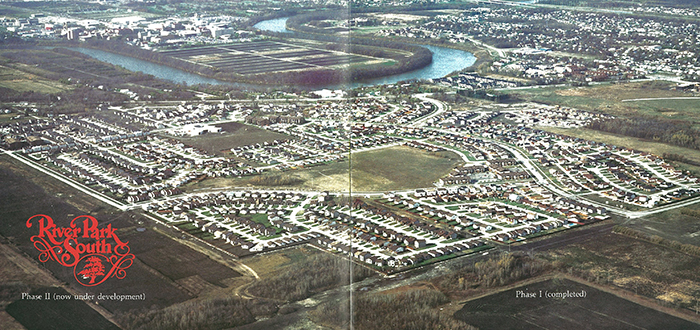
River Park South demonstrated that successful neighbourhoods require more than just housing. Schools, recreation, transit connectivity, commercial amenities, and public spaces need to be carefully considered as the community matures and grows.
Many of the lessons learned in Qualico’s first master-planned communities continue to influence how Qualico approaches land development today.
In Sage Creek, farmland on the edge of the city has evolved into one of Winnipeg’s most sought-after communities. Homes, schools, shops, restaurants, wetlands, and public spaces are intentionally connected to create a neighbourhood that supports everyday life and sets a high bar for other urban developments in the city to emulate.
A similar story can be found in Edmonton’s burgeoning Marquis community, where life in the North Saskatchewan River valley echoes a simpler time. Here, residents enjoy an abundance of natural features, recreation amenities, and countryside living, while remaining connected to everything Edmonton has to offer.
At the heart of every community plan is a simple question: How will people live here over time?
Answering that question requires the development team to think well beyond current market conditions. New communities can take several decades to mature, necessitating planning that anticipates future needs while remaining flexible enough to adapt as those needs evolve.
That means carefully considering where multi-family housing belongs, how active living connects to public spaces, where future schools and commercial services should be located, how people can age in place, and how transportation networks will support residents decades from now.
Planning for generations
Another example of long-term thinking is the Harmony community, located 10 minutes west of Calgary in Rocky Mountain County.
Harmony required significant upfront investment, extensive infrastructure planning, and confidence in a vision that would take years to fully emerge.
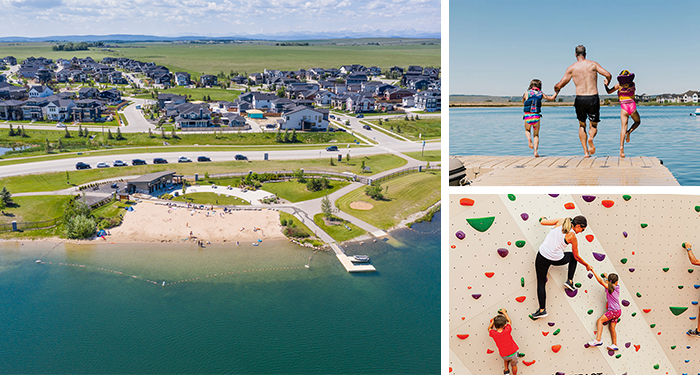
Today, it is recognized as one of southern Alberta’s premier communities, known for its lakeside living, sand beach, pathway systems, parks, recreation amenities, and growing commercial areas.
With 58 active communities in development throughout Western Canada and Texas, Qualico continues to approach land development with a long-term view, backed by seven decades of stability and forward-thinking.
Qualico 75th anniversary series
Read more stories from our 75th anniversary series:
Rooted in resilience, built for generations: The evolution of Qualico
Published: February 2026
Published: February 2025
Published: February 2024
Published: February 2023
Published: January 2024
Published: June 2021
Published: February 2026
Published: February 2025
Published: February 2024
Published: February 2023
Published: January 2024
Published: June 2021