

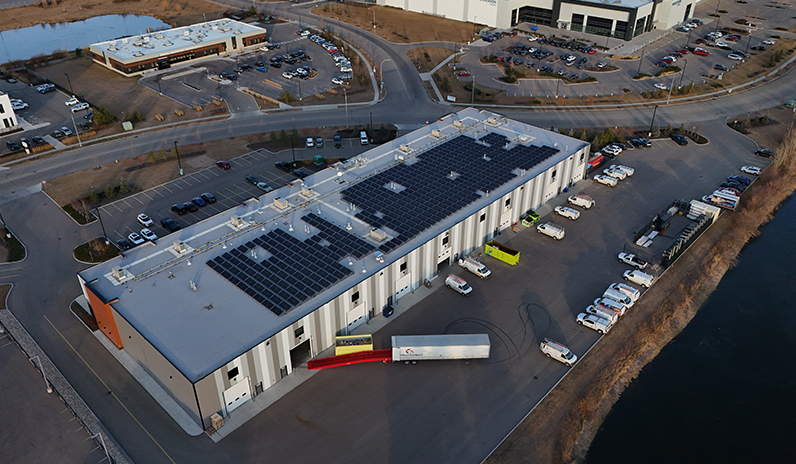
Qualico Properties boosts sustainability with solar power at N170 Henday Business Park
Summary
- Qualico Properties has installed a 408‑panel solar array at N170 Henday Business Park in northwest Edmonton.
- The system began operating on Nov. 8, 2025, and is designed to achieve net‑zero annual power consumption for the building.
- The project supports Qualico’s corporate responsibility goal of delivering sustainable, high‑efficiency developments that exceed legislated requirements.

Edmonton, AB – Qualico Properties is advancing its corporate responsibility goals with the installation of a large‑scale solar power system at N170 Henday Business Park in northwest Edmonton, reinforcing its commitment to building sustainably while making sound, long‑term investment decisions.
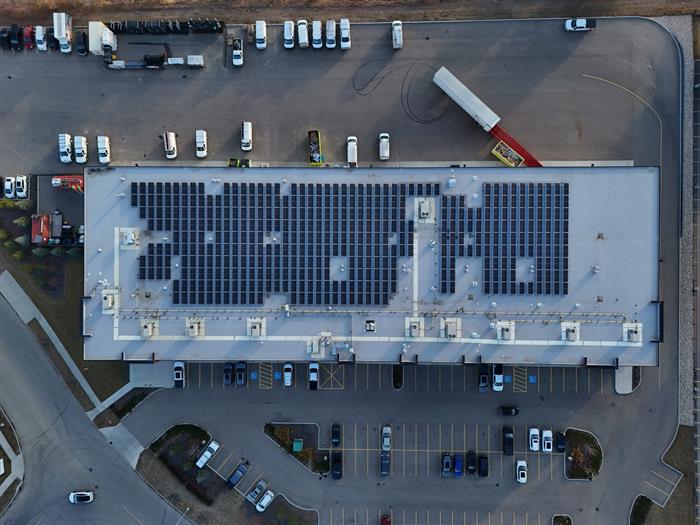
The 48,000‑sq‑ft office and warehouse flex building is now home to a 408‑panel solar array capable of generating up to 180 kWac. The panels began operating on Nov. 8, 2025. While power production is limited by inverter capacity and regulatory requirements that restrict generation to what the building consumes on an annual basis, early performance is already delivering valuable insights.
“This project was about doing the right thing environmentally, while also ensuring it makes financial sense,” said Ulf‑Hilmar Hahn, Vice-President, Development Northern Alberta & BC, Qualico Properties. “We intentionally used N170 Henday Business Park as a case study to understand the benefits, challenges, and long‑term value of solar before deciding how and where to expand this approach.”
A practical test case for sustainable development
N170 Henday Business Park was selected for several strategic reasons. The industrial building features a large, flat roof well‑suited for solar, is fully owned by Qualico Properties, and is primarily occupied by Qualico business units including The Floor Show and Star Mechanical. That level of control allowed the team to test solar integration without the complexities of joint‑venture approvals or uncertain tenant turnover.
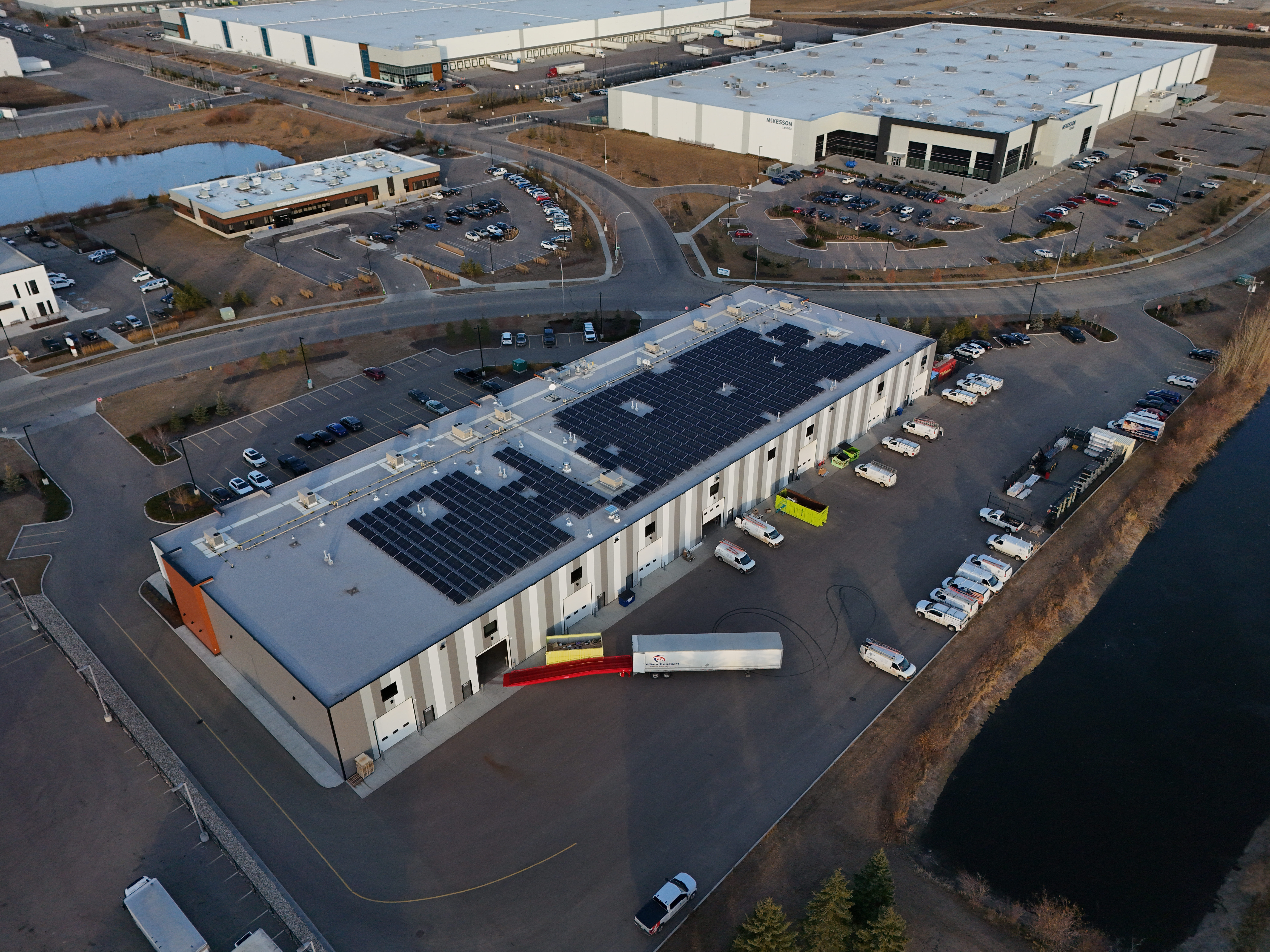
Solar power also aligns directly with Qualico Properties’ development scorecard, which emphasizes sustainable projects that exceed legislated requirements for operational energy efficiency.
“Solar fits squarely within our responsibility to be good environmental stewards. It’s a tangible way to reduce the building’s environmental footprint while strengthening the long‑term performance of the asset.”
Performance, resilience, and financial value
 The building’s baseline power consumption ranges from 20 to 30 kW, depending on seasonal conditions, with peak weekday demand reaching 40 to 50 kW. While winter production has been modest due to shorter days and snow cover, energy generation has ramped up quickly as daylight increases. In March, peak daily production reached nearly 150 kW, and during a sunny week early in the month, solar output accounted for roughly 75 per cent of the building’s total energy use.
“The speed at which production ramps up in spring has been striking. Once the sun is higher and the panels are clear, the system performs exceptionally well.”
On an annual basis, the solar array is designed to achieve net‑zero power consumption. During summer months, the building exports surplus power to the grid at peak demand rates, while purchasing electricity at lower rates during winter. The system also provides added resilience, helping keep the building energized during summer grid outages.
From a financial perspective, the project is modeled with a 54‑month payback period, including accelerated tax write‑downs permitted under federal incentives. Over time, monetizing previously unused roof space is expected to increase the building’s overall value.
“Not only does it have environmental benefits, but the additional revenue and long‑term asset lift strengthen the business case in a meaningful way.”
Informing future solar investments
While the project is not a one‑size‑fits‑all solution, it is shaping how Qualico Properties evaluates renewable energy across its portfolio. Larger industrial buildings with stable tenancy and ample roof space are the most promising candidates.
“Personally, I think the future for solar is bright. We want to fully validate the performance here, learn from it, and then decide where it makes the most sense to take the next step.”
Published: February 2026
Published: February 2025

Published: February 2024

Published: February 2023

Published: January 2024
Published: June 2021
Published: February 2026
Published: February 2025
Published: February 2024
Published: February 2023
Published: January 2024
Published: June 2021